The 6 Brand Archetypes Most Startups Get Wrong
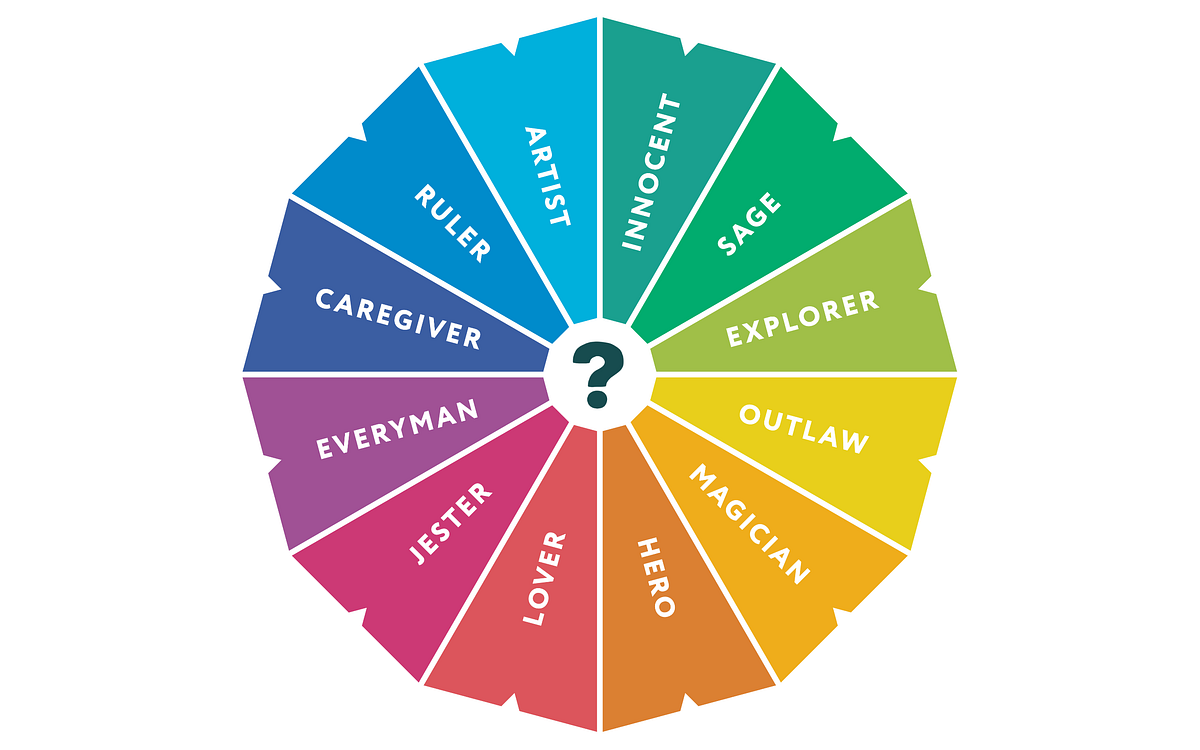
TL;DR: The popular 12-archetype model (Hero, Rebel, Sage, etc.) is a useful starting point but a dangerous ending point. It focuses on personality — how your brand acts — instead of positioning — why people choose you. A better framework groups archetypes into 6 emotional families rooted in what humans actually want. Most startups pick the wrong archetype because they're answering the wrong question.
If you've ever Googled "brand archetypes," you've seen the wheel.
Twelve slices. Twelve personalities. The Hero. The Rebel. The Sage. The Explorer. Each one comes with a neat description, a few logo examples, and the implication that choosing one is basically your brand strategy.
It's not.
The 12-archetype model — originally derived from Carl Jung's work on universal psychological patterns — is genuinely useful. Jung's insight was profound: humans instinctively recognize certain character patterns, and we form emotional connections with them before we even think about it. That's real. That's powerful.
But somewhere between Jung's clinical research and the internet's branding content, something important got lost.
The problem with picking a personality
Most founders encounter archetypes like this: they read a blog post, take a quiz, and land on something that sounds right. "We're The Creator." "We're The Explorer." "We're The Hero."
Then what?
They adjust their tone of voice. Maybe they tweak their color palette. They write copy that sounds more "heroic" or more "rebellious." And they feel like they've done brand strategy.
But personality is not positioning.
Personality is how your brand acts. Positioning is why someone chooses you over every alternative — including doing nothing. These are fundamentally different questions, and the 12-archetype model only answers the first one.
Think about it this way: Nike and Duracell are both "Hero" brands. They both embody courage, determination, and triumph. But they occupy completely different psychological spaces in your mind. No one cross-shops between running shoes and batteries. The archetype is the same — the position is worlds apart.
So if knowing your archetype doesn't tell you where you sit in the market, what does?
Personality vs. position
Here's the distinction that matters:
Personality is your brand's character traits — playful, authoritative, rebellious, nurturing. It determines tone of voice, visual style, and the feeling of your communications.
Position is the emotional and psychological space your brand occupies in someone's mind — and the motivational driver that makes them choose you. It determines pricing power, competitive differentiation, and growth potential.
Both matter. But most startups stop at personality and never get to position. They know what their brand sounds like but can't articulate why a specific type of person would pay a premium for it.
This is why two brands can share the same archetype and have completely different outcomes. One owns a clear position. The other is just performing a character.
A better framework: 6 emotional families
The model we use doesn't start with personality. It starts with human motivation.
Instead of 12 characters, imagine 6 emotional territories — each one representing a fundamental human need. These aren't personality types. They're the reasons people choose. Every brand that commands a premium sits clearly in one of these spaces:
Control & Status — The need for order, authority, and recognized achievement. Brands here promise mastery and prestige. You choose them because they signal that you've arrived. Think Mercedes-Benz, Rolex, or Bloomberg. The emotional promise: "You are in control. You have earned this."
Vitality & Adventure — The need for energy, excitement, and new experiences. Brands here promise intensity and freedom. You choose them because they make life feel bigger. Think Red Bull, GoPro, or Jeep. The emotional promise: "Life is an adventure. Don't hold back."
Independence & Creativity — The need for self-expression, originality, and breaking from convention. Brands here promise authenticity and creative freedom. You choose them because they reflect who you really are. Think Apple, Tesla, or Patagonia. The emotional promise: "Think different. Be yourself."
Connection & Belonging — The need for warmth, community, and shared experience. Brands here promise togetherness and acceptance. You choose them because they make you feel part of something. Think Airbnb, IKEA, or Coca-Cola. The emotional promise: "You belong here. We're in this together."
Care & Trust — The need for safety, reliability, and genuine concern. Brands here promise protection and consistency. You choose them because you trust them completely. Think Johnson & Johnson, Volvo, or USAA. The emotional promise: "You're safe with us. We've got you."
Joy & Playfulness — The need for lightness, humor, and simple pleasure. Brands here promise fun and irreverence. You choose them because they make the mundane enjoyable. Think M&M's, LEGO, or Southwest Airlines. The emotional promise: "Don't take it so seriously. Enjoy this."
These six families are rooted in motivational psychology research — frameworks like NeedScope and Censydiam that map how humans make emotional decisions. They don't replace the 12 archetypes — they organize them around why people buy instead of what your brand looks like.
Why this matters for startups
When you pick a position from an emotional territory instead of a personality from a character wheel, three things change:
Your differentiation becomes structural, not cosmetic. Two competing startups can both claim to be "innovative" (a Creator trait). But one might sit in the Independence & Creativity territory — appealing to people who want self-expression — while the other sits in Control & Status — appealing to people who want proven authority. Same feature, completely different customers, completely different pricing strategy.
Your pricing makes sense. Each emotional territory has a natural relationship with price. Control & Status brands command the highest premiums. Connection & Belonging brands compete on accessibility and scale. If your positioning says "premium" but your emotional territory says "belonging," you'll confuse your market and your CAC will climb.
Your brand can evolve without losing its core. Yeti started as a cooler company and expanded into drinkware, bags, and apparel — because it owned a position (Vitality & Adventure / rugged indestructibility), not just a product. If your brand owns an emotional territory, you can expand into adjacent products and categories. If it only owns a personality, every new product launch is a cold start.
The mistake most startups make
The most common error isn't picking the wrong archetype. It's picking the right personality for the wrong position.
A startup might nail the "Sage" voice — thoughtful, authoritative, educational — but position itself in the Care & Trust territory when its actual customers are buying for Independence & Creativity reasons. The copy sounds smart. The website looks polished. But the conversion doesn't happen because the emotional promise doesn't match the customer's motivation.
This is why archetype quizzes and listicles are dangerous at the strategic level. They help you find a voice. They don't help you find a position. And without a position, your brand is just a logo with personality traits attached — not a strategic asset that drives pricing power.
What to do instead
If you're a founder trying to figure out your brand archetype, start with these questions before you pick a personality:
What emotional territory do your best customers actually live in? Not what they say they value — what drives their actual purchase decision. Do they buy for status? For belonging? For self-expression? For security?
Where are your competitors positioned? If every competitor in your space is clustered in one emotional territory, there may be an open position in another. The gap is often a positioning gap, not a product gap.
What can you authentically own? Your positioning has to be credible. If your product is genuinely playful and accessible, forcing it into a Control & Status position will feel inauthentic — and your audience will sense it immediately.
What does this mean for your price? Your emotional territory should support your pricing strategy. If you want to charge a premium, you need to occupy a space where premium feels natural, not forced.
Once you've answered these, then choose your archetype. Let the personality serve the position — not the other way around.
The difference between a brand that charges a premium and one that competes on features is rarely the archetype they chose. It's whether they anchored that archetype to a real emotional position — or just used it to pick a color palette.